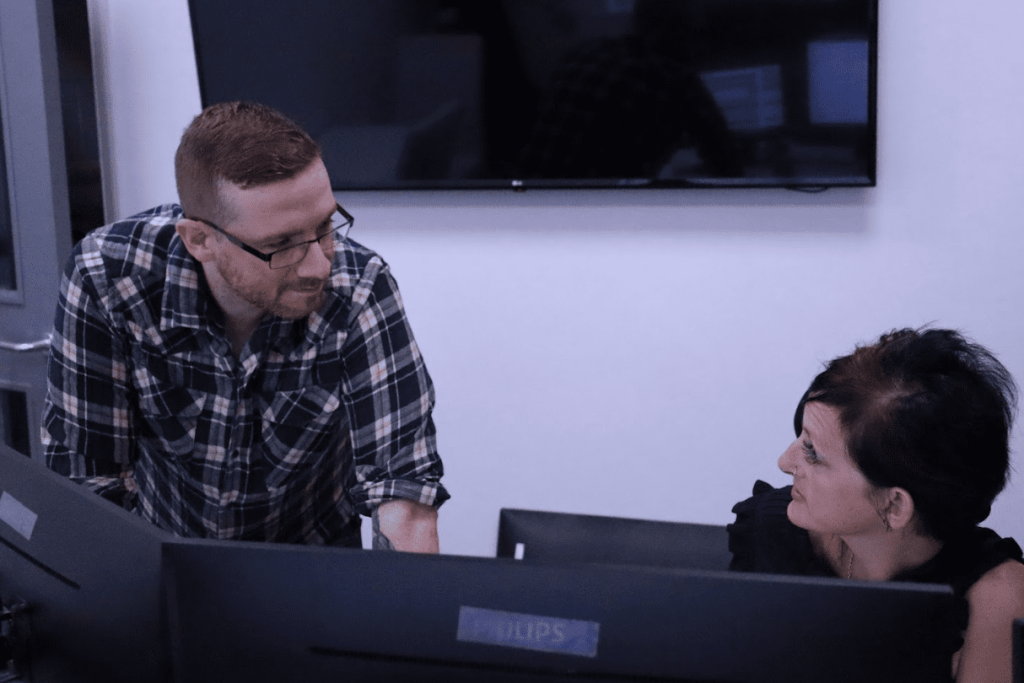
At Qoob, AI is part of everyone’s working day. Our paid media team, developers, project managers, social media team and even our finance director all use it, and our clients see the difference in faster turnarounds, sharper campaigns and fewer things slipping through the cracks.
Most of it is unglamorous though! Research and actions that used to take days get done in hours. Product data for thousands of items gets updated in one go. Reports build themselves, so our team spends its time reviewing them an then working on things that moves the numbers.
Here’s what that looks like in practice at Qoob, with just a few of the examples we’ve had in the past couple of months.
We act on platform changes before competitors do
When Google announced new product fields to help its AI answer shoppers’ questions in Shopping, the official guidance was thin. Most agencies wait weeks or months to see how others handle a change like that.
Mary, on our paid media team, used AI tools to pull Google’s announcement and the best third-party coverage into one research document. She then worked through a year of a client’s analytics data with it to group products, pull colours, sizes and pack quantities out of product URLs, and write clear answers to common customer questions. She estimates the job would have taken well over a week. It took a day, and the client had the new fields live ahead of their competitors.
Jason, our Head of Paid Media, then rolled the same approach out across 9,000 plant products for one client and most of a footwear range for another.
Mary also runs a daily AI news digest focused on the settings changes that can hit live account performance, so she spots problems before they cost clients money.
It’s not flashy or exciting, but getting heads up and digests on things quickly allow us to act quickly, meaning we do the best for our clients.
Our websites get built and fixed faster
We’re not using AI to replace our developers, or to remove them complete from the process but we’ve empowered them to work on things quicker and more efficiently meaning that they can focus on making the work the best that it can be, and ensuring that the human touch remains in everything that we do.
Phil, our Head of Development, sums it up quite simply: “I’ve been doing tasks in hours that would have taken days previously. The quality is also better overall as we’ve more time to think, and the security is more robust”
Jason (not a developer…) used AI tools with Google’s PageSpeed Insights to find and fix speed issues on a client’s site, and its pages are now on track to pass Core Web Vitals. On the same site, he designed a new header and mega menu, including a mobile menu layout he says he had some great advice from using the tools he did. He’s also used AI to build a pre-order feature, a gas bottle finder and “New In” product badges for the same client.
None of the above things went live without a developer reviewing them and making sure they were safe and functioning, but it meant that our cross-discipline team was able to help clients in record time.
Finally, Shona, one of our Project Managers, is now able to make small design and content changes herself to websites, so clients don’t wait in the development queue for quick fixes.
Clients always know where things stand
Again with project management, Shona has AI tools to build her a weekly report of meeting actions, upcoming and overdue tasks, and unanswered emails. She follows it with a weekly developer report that shows where every dev job stands, so nobody has to chase for an update. This information gets pulled from our entire workspace across emails, Google Drive, Slack and more. That work won her our internal AI award in August down to the time that she saved herself – important for a team member who works part-time and is able to deliver a full-time amount of work now.
Like a lot of our team, Phil uses AI tools to read through the tasks and emails linked to a client and draft a clear update – which can then be checked, edited and any additions made before sending over. The information is clear and concise and time is saved all round.
Our account managers all run automated checks across client projects that show which tasks are waiting on a client and how overdue they are, so we can nudge the right person before a deadline slips. Meaning that as little as possible runs overdue and nothing slips through the cracks.
Projects get scoped and tested properly
James, our Head of Client Delivery, has replaced several of our project spreadsheets with AI-built tools:
- A project cost calculator turns our time estimates into a PDF quote broken down by phase. A process that used to be manual for us and now looks clearer and more on-brand for our sales teams.
- A user story generator reads a functional spec and writes the first pass of user stories we test a build against, so fewer requirements get missed and we can be more thorough in our checks.
- A monthly client health check answers 25 questions about each account. Most answers come automatically from Asana, Clockify, our calendars, Drive, Slack and Gmail, and each one shows where it came from. The results roll up into one score per client, so we can spot issues on accounts early.
We build our own tools when off-the-shelf ones fall short
Tools like Claude could create Google Sheets but not edit existing ones, which ruled it out for most client reporting. Phil built a custom connector that fixes that, and the whole team now uses it – it’s a small thing but it’s allowed us to be more connected as a business and still use the tools we’re familiar with.
Harry, our Social Media Manager, built a browser tool that resizes and compresses large batches of client images. It runs entirely on our own computer, so client files never get uploaded anywhere, and means we don’t have to ask clients for compressed or resized imagery when they send – meaning they can just send us whatever, whenever and we’ll fix it.
Even the back office runs sharper
Nicky, our Finance Director, has tools to review our accounts every day and post any errors to Slack for her to check the next morning. It also finds overdue balances and drafts the chase emails (sorry clients!). She recently had AI tools move a set of costs into new accounting codes: “If I had done that manually that would have taken me at least half a day. AI tools did it in a couple of minutes!”
Now, admittedly this isn’t something that helps our clients directly, but for us at Qoob it’s a fantastic example of someone who historically was not a digital-native has been able to empower themselves to perform better in their role using the new tools we have available.
A person checks everything
We check everything AI produces before it reaches a client. Nicky reviews every flag, James’s health check lets anyone correct an automatic answer, and Phil checks all the code before it goes live.
We’re equally careful about access. Some AI connections give full edit rights with no read-only option, so our assistants are told to assume read-only access unless we ask otherwise. It’s important that things are safe and don’t get deleted – AI is great, but it still makes mistakes!
How we got the whole team using it
In June we launched a monthly internal AI award, with a cash prize for the most useful thing someone does with AI. This was a great incentive for the team to not only work on developing things themselves, but to be proud of the skills they’re learning and how they’re growing – and to talk about it with the whole team.
We also keep a shared prompt and tips library, so a good idea from one person quickly gets used by everyone. Since then, every team has made AI part of how they work.
As our MD, Matthew, put it: “I can proudly say we’re confident and competent with our use of AI and we’re ahead of many marketing agencies in the UK.”
Want to use AI like this in your business?
We can help you find the jobs AI can take off your team’s hands, set it up safely, and measure the time it saves. Get in touch with Qoob to talk it through.
You can also hear more at Accelerating AI, the free conference we co-host. It’s on Tuesday 13 October at Unity Place, Milton Keynes, five minutes’ walk from Milton Keynes Central, with parking on site and lunch included. Speakers include Canva, Microsoft, NatWest and FreeAgent, and we’ll be talking about AI in marketing. Book your free place or find out more at acceleratingai.co.uk.